
Last updated October 17, 2026
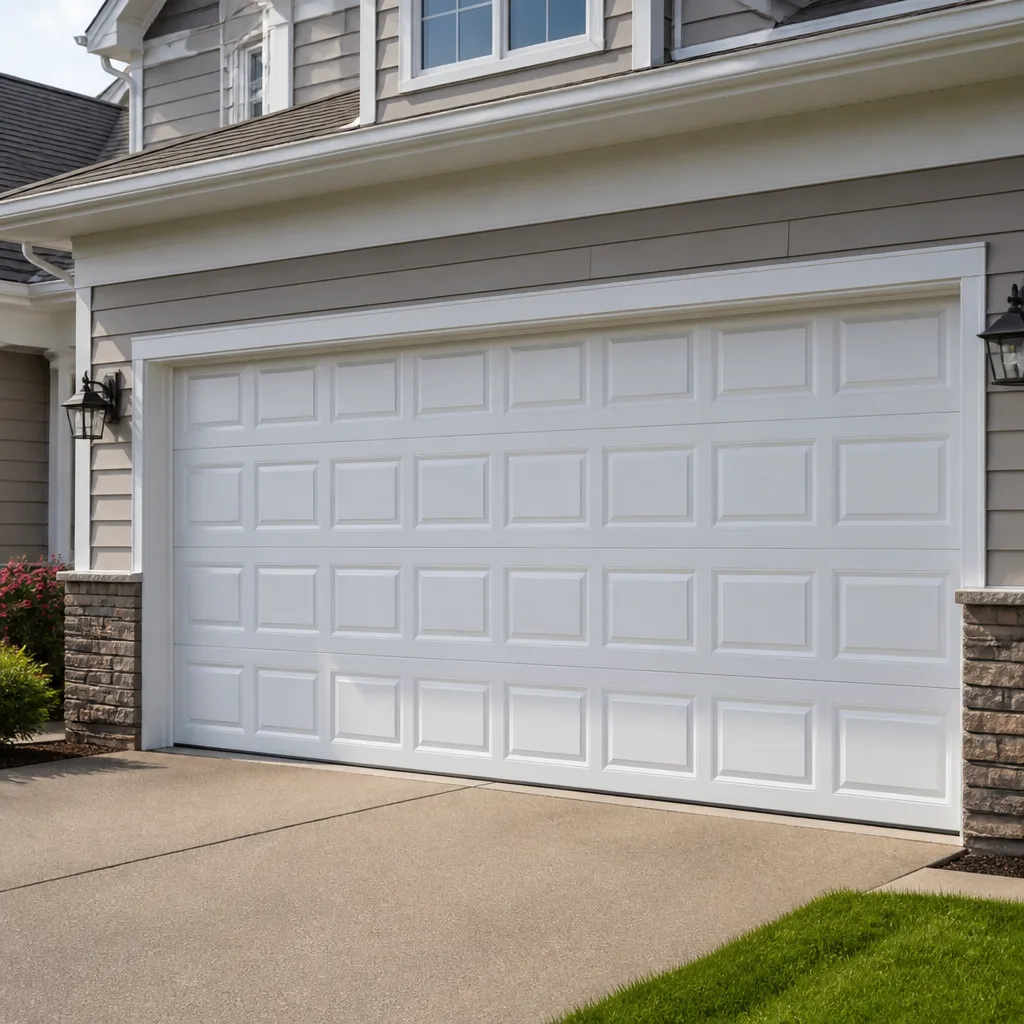 Raised-panel steel
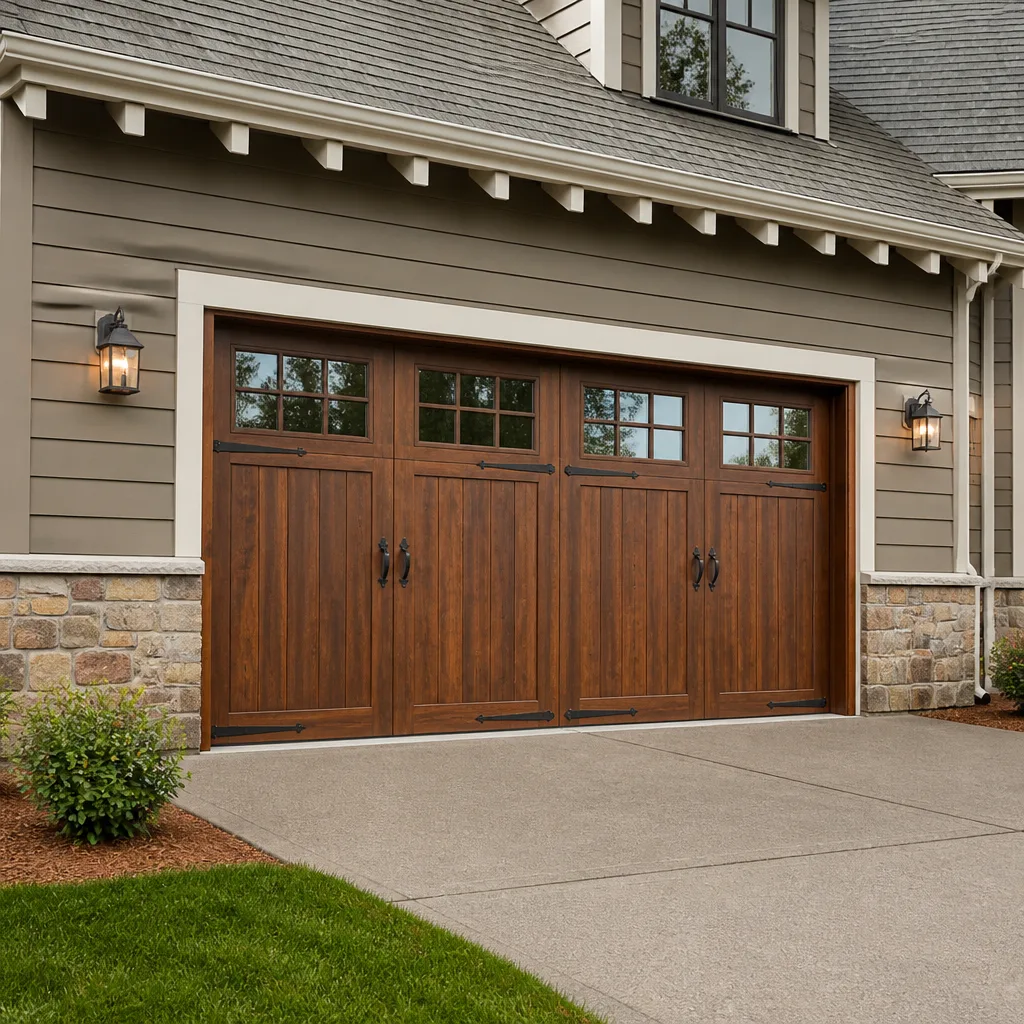 Carriage house
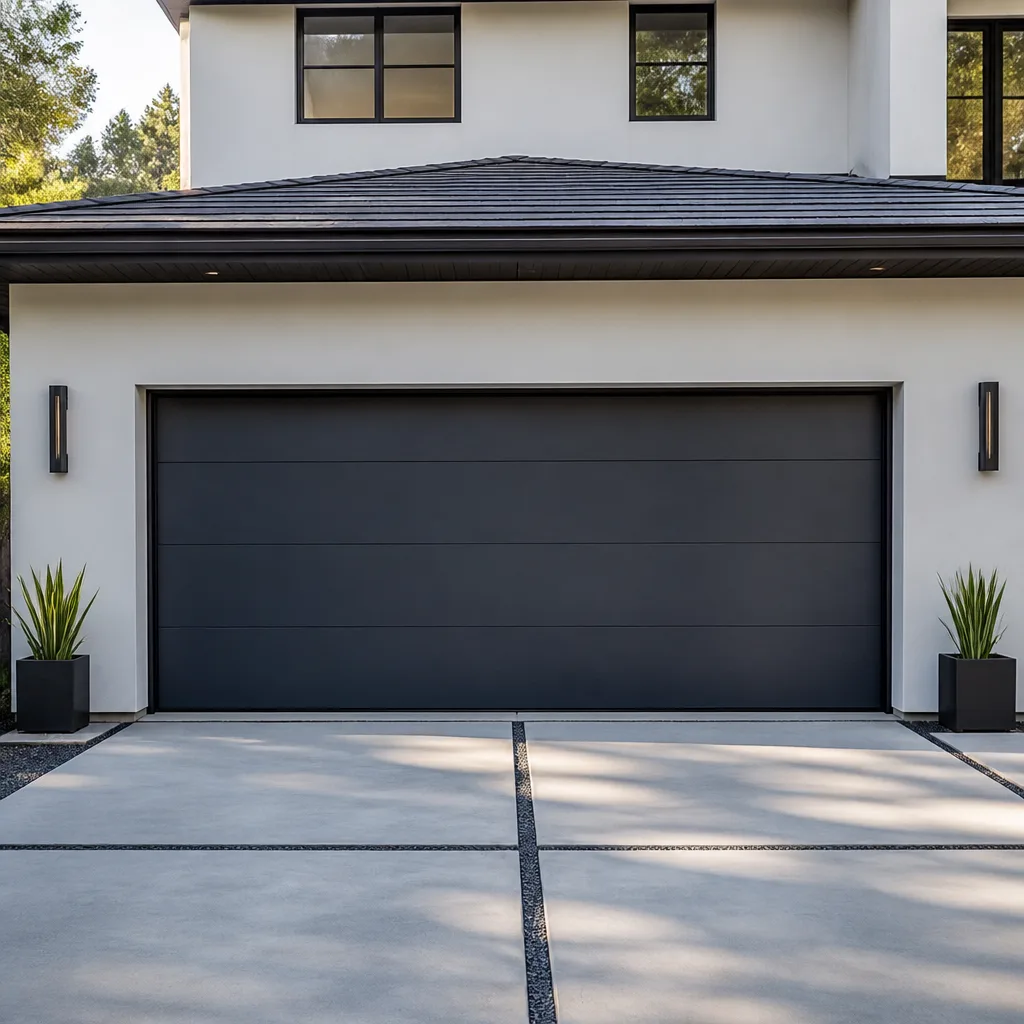 Modern flush
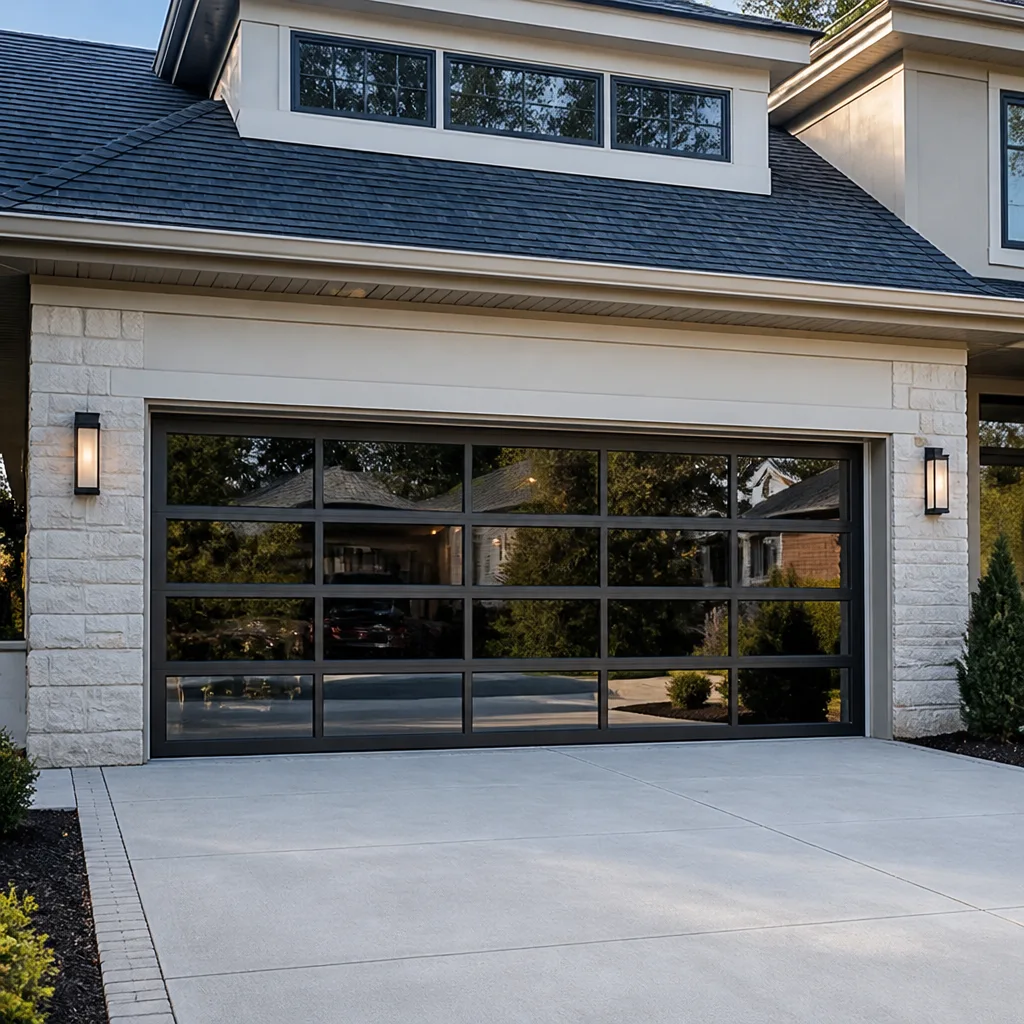 Full-view glass
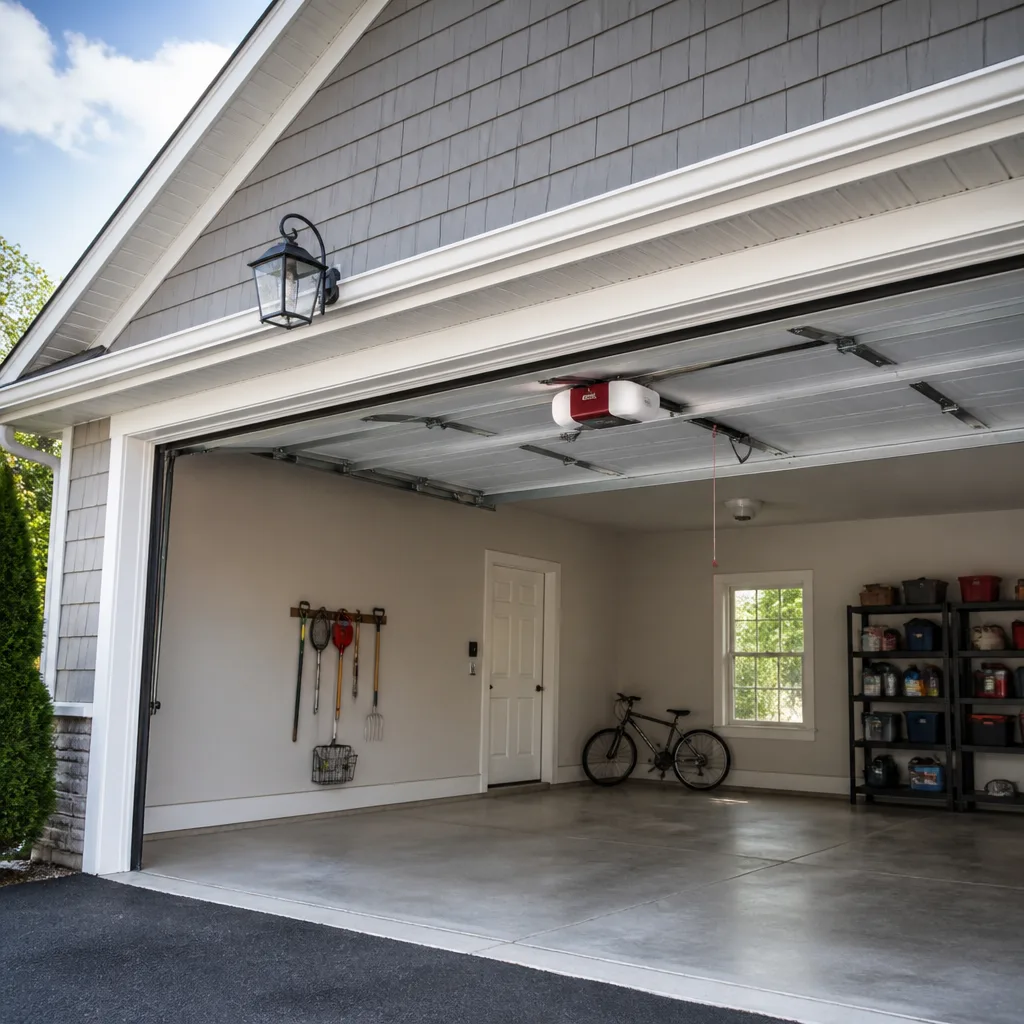 LiftMaster openers
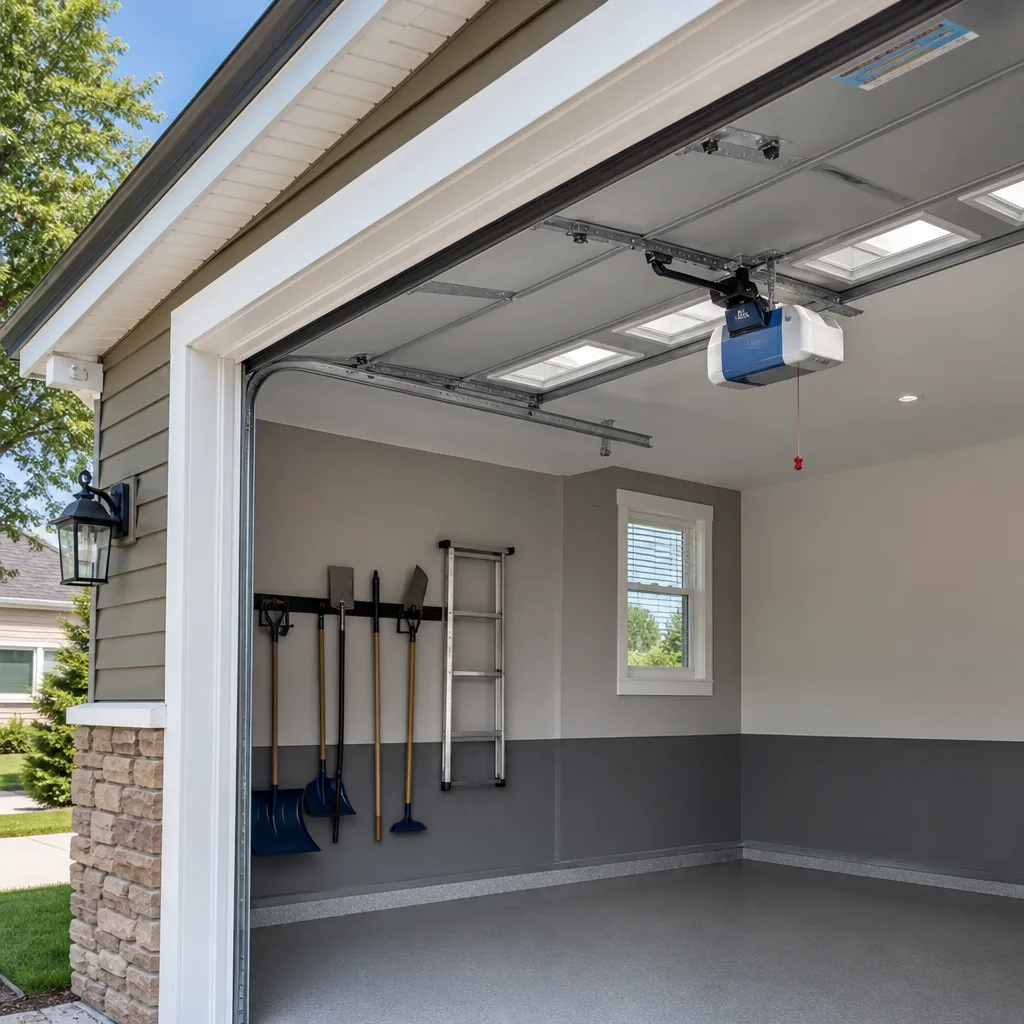 Chamberlain openers
Full 25-point door and opener safety check with every visit - springs, cables, rollers, tracks, and your LiftMaster or Chamberlain opener included
You get a price before we start. It does not change when the truck arrives.
Get your free estimateThe Complete Guide to Garage Door in Brooklyn
Most Brooklyn homes were built between 1900 and 1960, which means the rough opening your grandfather’s carriage door fit may not match any standard modern door size. Buying the wrong one costs homeowners an average of $400 to $900 in framing corrections they weren’t quoted upfront. This guide walks through every decision a Brooklyn homeowner faces with a garage door: choosing the right material for salt air and narrow lots, understanding what the NYC Department of Buildings actually requires, reading a quote line by line, and matching the door to the architecture of your street. For related reading, see our DIY vs Professional Garage Door: The Brooklyn Homeowner’s Decision Guide. We’re writing this from the perspective of a Brooklyn garage door company that has measured thousands of these older openings, and we’ll tell you what we’ve learned.
Styles & brands we work with
Quick Answer
Choosing, maintaining, or replacing a garage door in Brooklyn requires working with the borough’s older housing stock, coastal humidity, and specific NYC Department of Buildings permit rules. For details on permits, see Garage Door Permits, Codes & Inspections in NY: What You Need to Know. The right approach is to measure your rough opening before you ever look at a catalog, budget for a door that fits your street-facing architecture, and get a written quote that includes framing, track, permit, and haul-away costs. A quality garage door in Brooklyn typically lasts 15 to 25 years with two service checks a year and salt-air-conscious maintenance.
Table of Contents
- Why Brooklyn’s housing stock changes everything about your garage door
- Choosing door material for Brooklyn’s salt air and humidity
- NYC DOB permits for garage doors: what’s actually required in Brooklyn
- How to read a garage door quote line by line in Brooklyn
- Curb appeal on a Brooklyn street: panel style, finish, and brownstone-adjacent homes
- Springs, openers, and the parts Brooklyn homeowners ask about most
- A Brooklyn garage door maintenance schedule that actually works
- Common Mistakes to Avoid
- When to Call a Professional
- Frequently Asked Questions
- The Bottom Line
Why Brooklyn’s housing stock changes everything about your garage door
Brooklyn is not a suburb with a two-car attached garage on every lot. The borough’s garage doors are attached to rowhouses in Park Slope, detached two-families in Midwood and Sheepshead Bay, converted carriage houses in Bed-Stuy, and the occasional new-build in Williamsburg or Red Hook. That variety matters because the rough opening, the framed hole in the wall the door mounts into, differs from one structure type to the next.
Rowhouses built between 1900 and 1930 often have narrow one-car openings around 8 feet wide, but we regularly measure openings in brownstone-adjacent homes that are 7 feet 6 inches, 8 feet 9 inches, or some other dimension no modern catalog lists as standard. Detached two-family homes from the 1940s and 1950s usually have wider 9-foot openings, but height varies depending on whether the original owner parked a taller sedan or a shorter wagon. Converted carriage houses add another variable: the door may be 10 or 12 feet wide and arched at the top, which means a square modern panel won’t fill the opening without custom trim or framing.
Here is the practical consequence. Standard residential garage doors come in widths of 8, 9, and 16 feet. If your opening is 8 feet 9 inches, a 9-foot door won’t fit without cutting into the masonry or furring out the jamb. Cutting into brick on a Brooklyn rowhouse is expensive and rarely worth it. Furring out the jamb, adding wood to narrow the opening, costs $200 to $600 depending on how much adjustment is needed. If nobody measures the rough opening before ordering the door, that cost lands on you after the fact.
Before you shop for a new door, measure the rough opening width and height at three points each: left, center, and right. Write down the narrowest and shortest dimensions. If the opening is not a standard size, tell the company you call. A technician who works in Brooklyn regularly will know the openings in your neighborhood and can quote the framing adjustment up front. That single step prevents most surprise invoices.
Choosing door material for Brooklyn’s salt air and humidity
Brooklyn sits on a coastline. Salt air from the Atlantic and the harbor reaches nearly every neighborhood, and it does to garage doors what it does to cars: it finds untreated metal and starts working. Coupled with humid summers and freeze-thaw winters, the material you choose determines whether your door lasts 10 years or 25.
Here is how the three common materials behave in Brooklyn:
- Steel: The most popular choice for good reason. Modern steel doors, like those from Clopay and Amarr, arrive with factory-applied primer and baked-on finishes designed to resist surface rust. On a Brooklyn rowhouse or detached two-family, a 25-gauge steel door is a sensible default: it handles salt air well, takes a wide range of paint colors, and costs less than wood. The caveat is edges and hardware. Scratches through the finish will rust if left bare, especially within a few blocks of the water in Sheepshead Bay, Gerritsen Beach, or Red Hook.
- Wood composite: Looks closer to a real carriage-house door but resists moisture better than solid wood. For homeowners who want the brownstone-adjacent look without the maintenance, a wood composite or insulated wood-look steel door balances appearance against coastal humidity. Solid wood doors in Brooklyn require annual sealing, and even then, the bottom section can swell in humid summers.
- Aluminum: Lighter than steel and naturally corrosion-resistant, which makes it a reasonable choice in waterfront neighborhoods. The trade-off is dents. An aluminum door in a narrow Brooklyn driveway takes a hit from a bicycle, a stroller, or a grocery cart more easily than steel. For most Brooklyn homes, full-view aluminum is a style choice for modern townhomes rather than a durability upgrade over steel.
We tell Brooklyn homeowners to keep it simple: choose an insulated steel door with a quality factory finish unless the street-facing architecture demands wood. In neighborhoods with landmark district requirements, some blocks require wood or wood-look doors. In that case, specify a wood composite or wood-look steel and confirm the finish with the landmarks approval before you order.
NYC DOB permits for garage doors: what’s actually required in Brooklyn
New York City is stricter than most of the country on garage door work, and Brooklyn’s older housing stock is exactly where the rules get skipped. The NYC Department of Buildings generally requires a permit when a garage door is being installed or structurally altered, which includes changing the framing around the opening. A straight door-for-door swap on the same tracks, with no framing changes, often falls under minor work. The moment the job involves cutting studs, altering masonry, or changing the rough opening size, a permit is usually required.
What does this mean for a Brooklyn homeowner? If your rowhouse opening is non-standard and the installation requires furring out the jamb, you need a contractor who will file the right paperwork. Skipping the permit can surface later when you sell the house, because the title search and DOB records can flag unpermitted work. Fixing it after the fact means paying double: once to open the wall, and once to close it back under inspection.
Ask any company you’re considering two direct questions. First: “Does this specific job require a DOB permit?” Second: “Will you file it, and is the filing fee included in my quote?” A straight answer is a mark of an honest operator. A vague answer, or an offer to “handle it without paperwork,” is a warning sign. Jesse Calder, owner at Fernbrook Garage Doors Brooklyn, has dealt with enough DOB paperwork in this borough to know that a proper filing is part of the job, not an optional line item.
How to read a garage door quote line by line in Brooklyn
The second fear a homeowner has, right after the fear of the door not opening, is the invoice that comes in higher than the quote. Our Garage Door Cost Breakdown: The Brooklyn Homeowner’s Reference for 2026 explains what to expect. The way to prevent that is to understand what a complete quote looks like before you sign it.
A complete garage door quote in Brooklyn should include these line items:
- Door and panel cost: the door itself, including the finish and any insulation rating, with the manufacturer and model named.
- Hardware and track: tracks, hinges, rollers, cables, and bottom seal. On an older Brooklyn home, the tracks may need replacement even when the door itself is being repaired. This line item should be explicit.
- Springs: torsion or extension, rated for the door weight. On an 8-foot-wide rowhouse door, a pair of torsion springs rated for 10,000 cycles costs more than the minimum-rating springs, and the quote should say which you’re getting.
- Labor: installation or repair time, including any disassembly of the old door.
- Haul-away and disposal: the old door, the old track, and any packaging. In Brooklyn, where the sanitation pick-up rules for construction debris are specific, this has a real cost. If it’s missing from the quote, it will appear later.
- Framing or rough opening adjustment: if the opening is non-standard, this is the line that separates honest quotes from incomplete ones.
- Permit filing: if the job requires it, the filing fee and any expediting cost should be listed.
We recommend asking for the quote in writing, sent to you by email, before the work starts. Fernbrook Garage Doors Brooklyn does this on every visit: a written price is presented before any work begins. No exceptions. If a contractor won’t put the number on paper before starting, pause and call someone else. The price you agree to is the price you should pay.
Curb appeal on a Brooklyn street: panel style, finish, and brownstone-adjacent homes
A garage door can cover up to a third of a Brooklyn rowhouse facade. On a street where every house sits shoulder to shoulder, the door is not just machinery; it’s architecture. The panel pattern and finish you choose reads from the sidewalk, and the wrong door can quietly undermine the front of the home.
Here is style guidance based on the borough’s common housing types:
- Brownstone and brownstone-adjacent rowhouses: recessed panel or flush panel doors in deep, muted colors: forest green, charcoal, dark brown, or a stained wood-look finish. Avoid bold carriage-house styling unless the original building had it. The goal is for the door to belong to the block. On landmarked blocks, check with the Landmarks Preservation Commission before choosing the finish.
- Brick detached two-families in Midwood, Sheepshead Bay, and Gravesend: these homes can carry a wider range of styles. Carriage-house patterns with decorative hinges read well here, and lighter steel colors in beige, white, or slate are common. Match the door to the trim rather than the brick for a more deliberate look.
- Modern and new-build townhomes in Williamsburg and Red Hook: full-view aluminum or horizontal-slat steel doors in dark finishes suit these buildings. The door should look like a considered part of the facade, not an afterthought with a generic white panel.
When we replace a Brooklyn garage door, we spend a few minutes walking to the sidewalk with the homeowner to look at the house the way a neighbor does. That sounds simple, and it is, but it changes the choice. A painter doesn’t choose a color from inside the house, and a garage door shouldn’t be chosen from inside the garage.
Springs, openers, and the parts Brooklyn homeowners ask about most
Most repairs in Brooklyn come down to three parts: the springs, the opener, and the tracks. Understanding what they do and what they cost clears up most of the anxiety around a service call. For specific pricing on broken springs, see our page on Garage Door Spring Repair in Brooklyn.
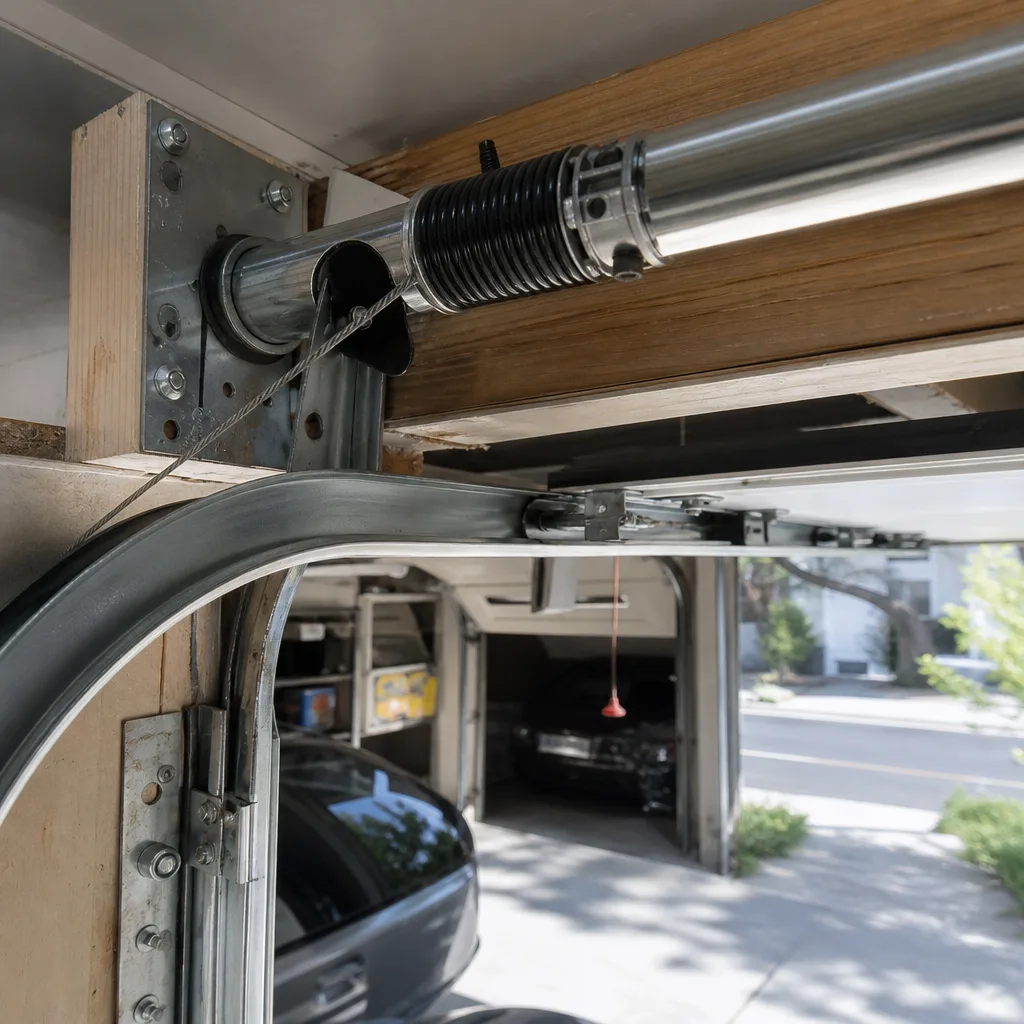
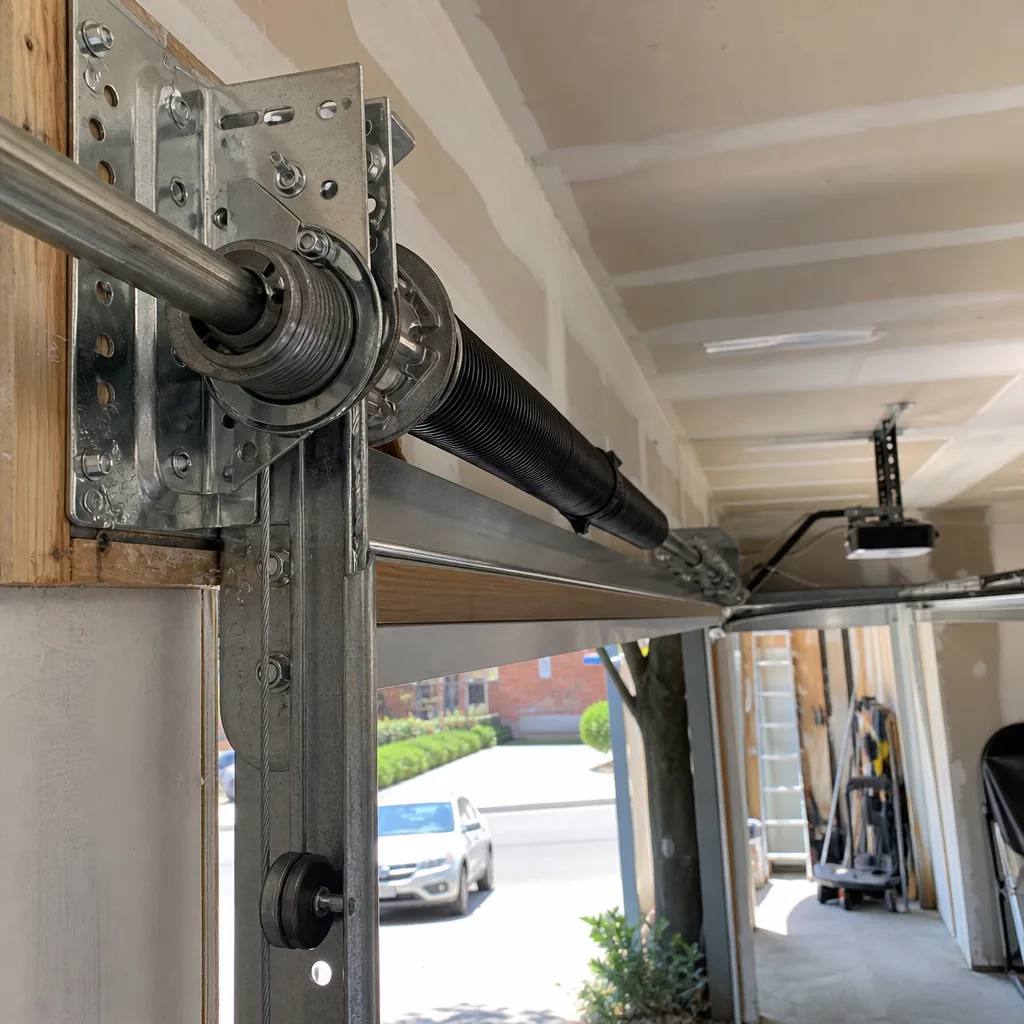
Torsion springs sit above the door and do the lifting. They carry tension, and when they break, the door becomes heavy and dangerous to move by hand. In Brooklyn, where many doors are opened manually because the garage is used for storage rather than parking, a broken spring can go unnoticed for a while. The cost to replace a pair of torsion springs in Brooklyn is typically $180 to $340. High-cycle springs, rated for more lifts, cost a bit more but last years longer. We recommend high-cycle springs for any Brooklyn door that gets daily use.
Extension springs run along the horizontal tracks on older doors. They’re more common in pre-1960 Brooklyn garages. Replacement runs similar range, $150 to $300 for a pair, depending on the door’s weight and the hardware condition.
Garage door openers are the second most common repair. LiftMaster, Chamberlain, and Genie all work well in Brooklyn’s climate, and our technicians are trained on those brands and several others. A new opener with installation typically ranges from $375 to $650 in Brooklyn, including rail, motor, remotes, and safety sensors. If your opener is from before 2005 and struggles in winter, replacement is usually cheaper than repeated repairs. For more on this topic, see our guide on Garage Door Repair in Brooklyn.
Track alignment problems on older Brooklyn garages are common because the building settles, the wood frame shifts, or a car bumped the track years ago. Re-shimming and realigning track runs $150 to $300. If the track is bent beyond adjustment, a track replacement may be needed, and that climbs to $250 to $450 depending on the door size.
A Brooklyn garage door maintenance schedule that actually works
Brooklyn’s climate punishes neglect in specific ways. Coastal humidity corrodes hardware and the bottom seal. Winter road salt arrives on your car and then on the bottom panel of the door, and if it sits there, it accelerates rust. Here is a maintenance schedule that addresses those conditions directly.
Every 6 months, do these five things:
- Clean the bottom panel with mild soap and water, especially in winter, to remove road salt that lifts off the car. A 10-minute rinse extends the life of the paint and the metal.
- Inspect the bottom seal, the rubber strip at the base of the door, for cracks or gaps. In a Brooklyn winter, a broken seal leaks heat and lets in mice. A new seal costs $80 to $150 installed.
- Lubricate the hinges, rollers, and springs with a silicone-based garage door lubricant. Pet-safe options are available if you have a dog or cat in the garage. Avoid oil-based sprays, which attract dust and grime.
- Test the auto-reverse safety feature on the opener. Place a roll of paper towels under the door and close it. The door should reverse within a second of touching it. If it doesn’t, stop using the opener and call a technician.
- Listen. A door that’s getting louder is a door that’s telling you something. Grinding, popping, or shaking on the way up or down is a service issue, not a personality quirk.
If everything runs quietly and the door opens and closes evenly, you’ve extended the life of the door meaningfully. If something is off, the next call is cheap compared to what a neglected door eventually costs. Our page on Garage Door Installation in Brooklyn covers what a full replacement looks like when that day comes.
Common Mistakes to Avoid
- Ordering a door before measuring the rough opening. Brooklyn’s pre-1960 housing stock produces non-standard openings, and a door that doesn’t fit means framing work you didn’t plan for. Measure first, shop second.
- Skipping the DOB permit when the job requires one. Framing changes and structural work in Brooklyn normally need a permit, and unpermitted work surfaces at sale time. Ask before you sign.
- Choosing the cheapest springs without asking about cycle rating. Low-cost, low-cycle springs break sooner, and on a daily-use Brooklyn door that means paying twice in three years. High-cycle springs cost more up front and less overall.
- Ignoring the bottom seal until it’s visibly broken. Salt, water, and cold air move through a cracked seal in a Brooklyn winter, and rodents follow. Replace it as soon as it shows cracks.
- Trusting a quote that doesn’t include haul-away and framing. If the old door’s disposal and the rough opening adjustment aren’t in writing, they’ll show up on the final invoice. Get a line-item quote.
- Picking a door color without seeing it from the sidewalk. On a Brooklyn street of attached homes, the door reads as part of the facade. Choose it from the view a neighbor has, not from inside the garage.
When to Call a Professional
Garage door springs and cables operate under high tension. If a torsion spring breaks, do not attempt to remove or adjust it yourself. The stored energy in a wound spring can cause serious injury. Call a trained technician. The same applies to any job involving track replacement, opener reinstallation, or structural framing changes around the opening. If the door is off the tracks, unbalanced, or won’t reverse when it meets an obstacle, stop using it and place a call. Fernbrook Garage Doors Brooklyn offers free estimates in Brooklyn, with a live person answering the phone at (845) 610-0375 day or night. A technician will give you a written price before any work begins.
Frequently Asked Questions
A new garage door in Brooklyn typically costs $1,200 to $3,500 installed for a single door, depending on material, insulation, and whether the opening needs framing adjustments. Non-standard openings on older rowhouses add $200 to $600. Call (845) 610-0375 for an exact quote for your specific opening.
The NYC Department of Buildings generally requires a permit when the job involves structural changes, such as altering the framing around the opening. A direct door-for-door swap with no framing changes may qualify as minor work. Ask your contractor whether your specific job requires filing, and make sure the filing fee is in the written quote.
A well-maintained steel door in Brooklyn lasts 15 to 25 years, while solid wood doors need more attention and may last 10 to 20 years depending on salt exposure and sealing frequency. Homes within a few blocks of the harbor should expect more frequent hardware replacement due to corrosion.
Yes. A spring replacement is a standard service call, and a truck stocked for Brooklyn’s housing stock usually carries the common spring sizes. Repairs are often completed the same day, and the job is covered by the 365-Day Done Right Promise. Call (845) 610-0375 and a live person will schedule the visit.
Cold temperatures stiffen the metal tracks and rollers, and older openers with chain drives get louder in the cold. Salt and grime build-up also add noise. If the door runs smoothly but sounds loud, start with cleaning and silicone lubrication. If the noise is paired with shaking or uneven movement, have the track and springs inspected.
It shouldn’t. Fernbrook Garage Doors Brooklyn gives a written price before any work starts, and that number includes the labor, parts, and any framing adjustment needed for your opening. If the job reveals additional work, it’s quoted and agreed before anything is done. No surprise invoices.
The Bottom Line
A Brooklyn garage door lasts and looks right when the decisions are made with this borough in mind: the older rough opening sizes, the coastal humidity, the DOB permit rules, and the architectural weight the door carries on a street-facing facade. Measure the opening before you shop. Read every quote line by line. Choose a material and finish that suits your block, not just the catalog. And when something breaks, call someone who will put the price in writing and protect the home while working in it. Fernbrook Garage Doors Brooklyn provides garage door repair, installation, spring work, and opener service, and our full approach is covered on Fernbrook Garage Doors Brooklyn home. Call (845) 610-0375 for a free estimate.
Written by Jesse Calder, Owner at Fernbrook Garage Doors Brooklyn, serving Brooklyn since 2002. Browse more guides & resources.
See the difference
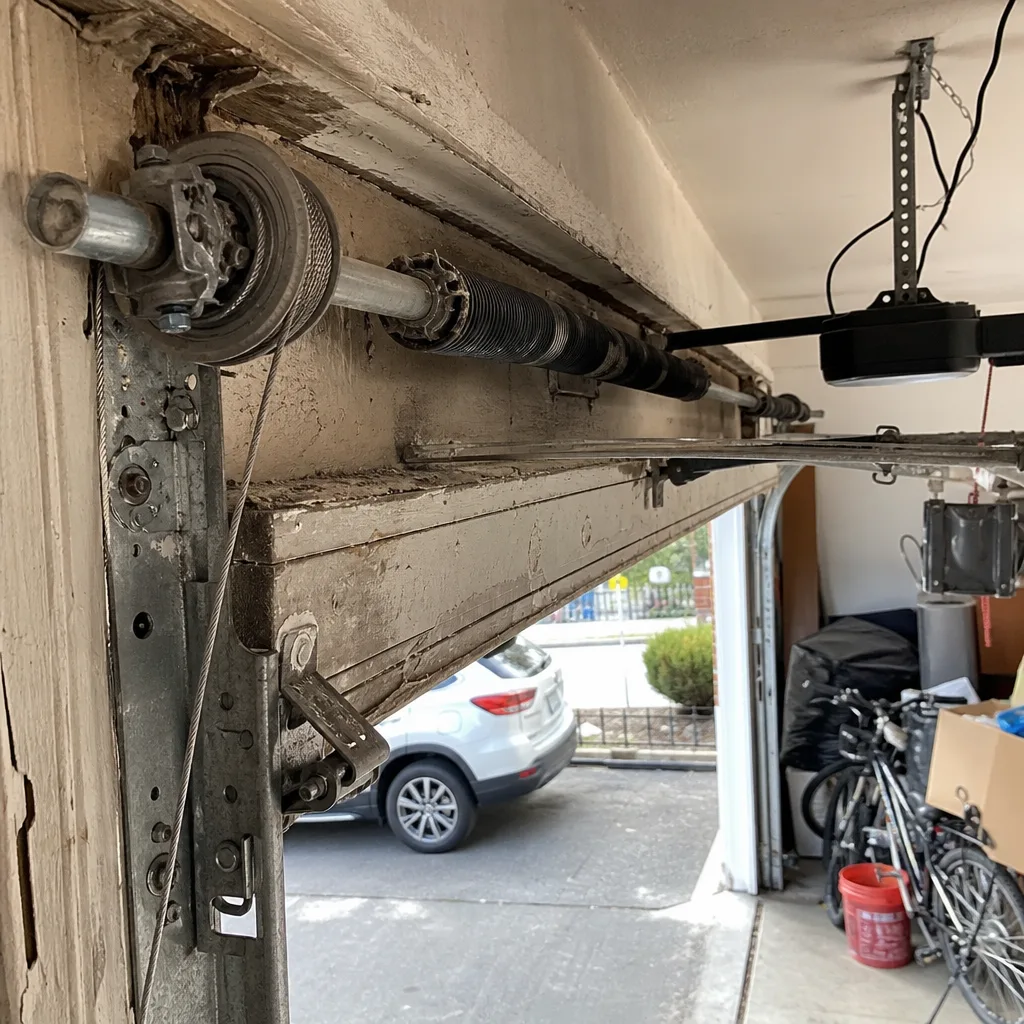 Before
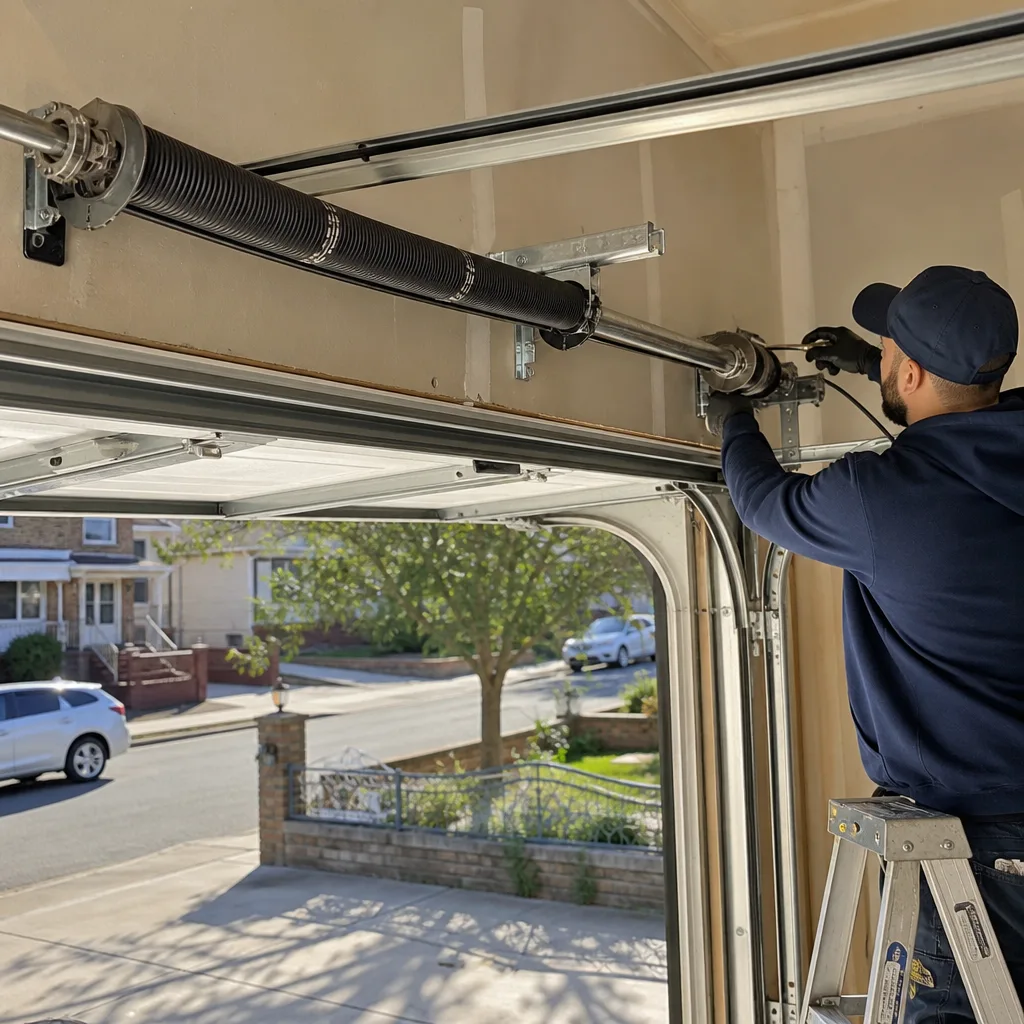 After
After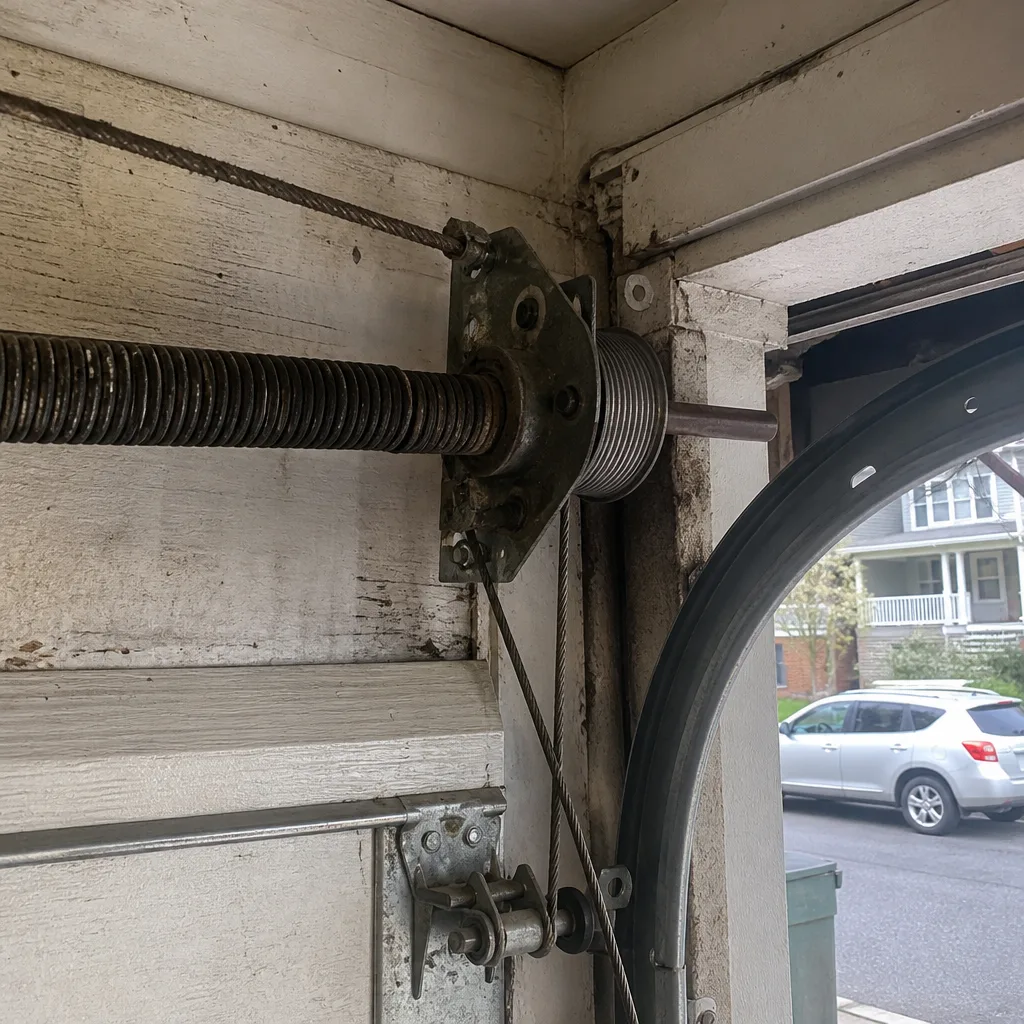 Before
 After
After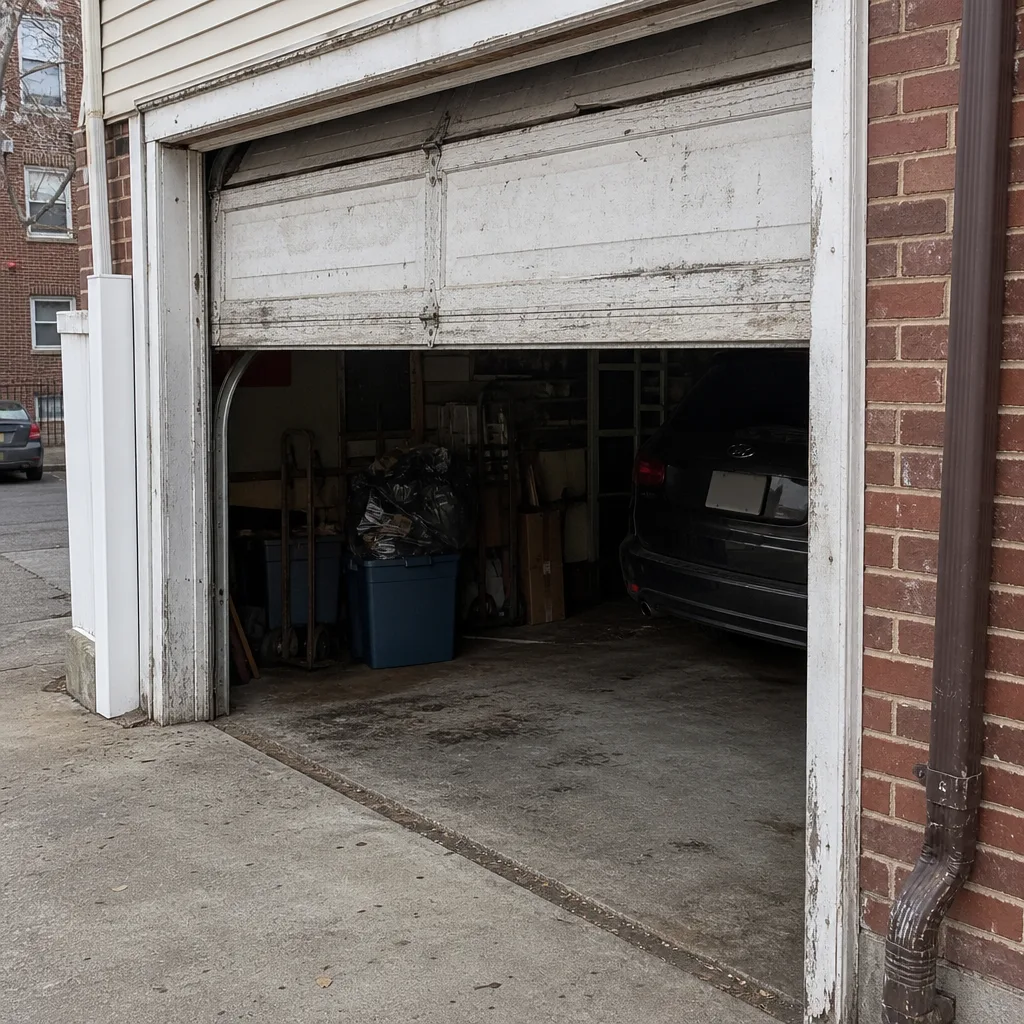 Before
 After
After